Observing the ocean over the long term: Universal Plastic’s contribution to the Bazaruto observatory
Universal Plastic · 2026
Understanding a changing ocean requires sustained observation, comparable data and collaboration across disciplines and communities. The study of the permanent observatory in the Bazaruto Archipelago, in Mozambique, brings these pieces together and includes Álvaro Bravo, a co-author affiliated with Universal Plastic.
An infrastructure to observe the ocean
Published in Frontiers in Marine Science on 1 October 2026 (Lebrato et al., 2026), the article describes the Bazaruto observatory, operated by the Bazaruto Center for Scientific Studies (BCSS) and Kisawa Sanctuary. The infrastructure covers approximately 6,850 km² of ocean habitats in the Western Indian Ocean, a domain nearly six times larger than the Bazaruto Archipelago National Park (1,430 km²), and integrates 14 long-term stations across six ecosystem types, from coral reefs and seagrass meadows to seamounts and the open ocean.
The model rests on a funding and operating scheme called Resort-to-Research (R2R), which links ecotourism, science, education and community stewardship to give the programme long-term continuity.

Figure 1. Bazaruto Archipelago (Mozambique), location of the observatory. Universal Plastic infographic based on Lebrato et al. (2026).
The observatory in numbers
Between 2017 and 2026, the programme accumulated the following records, according to the published article:
22+ million
high-frequency measurements
30+
ocean, weather and biodiversity variables
14
long-term stations
6
ecosystem types
~6,850 km²
observation domain
250,000+
minutes of underwater soundscapes
120,000+
georeferenced species records
14,000+ kg
of marine debris recovered*
* The figure refers to marine debris in general, not exclusively plastic. Source: Lebrato et al. (2026).
Four programmes, one time series
The observatory is organised into four thematic programmes: ecosystem dynamics, habitat mapping, migratory populations and marine plastics. This structure integrates the physical, chemical, biological and anthropogenic dimensions of environmental change and makes it possible to study the marine environment with more context than a single measurement.
Because the data are sustained over time, they allow baselines to be established and observed changes to be put in context. That is why the time scale matters as much as the number of measurements: a long, comparable series makes it possible to tell natural variability apart from changes associated with human pressures.

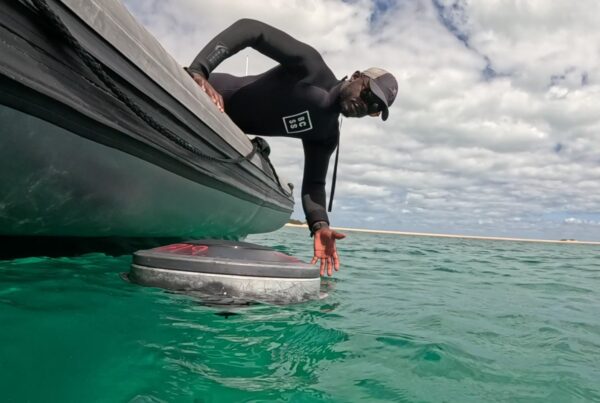
Figure 2. Fieldwork in the Bazaruto Archipelago.
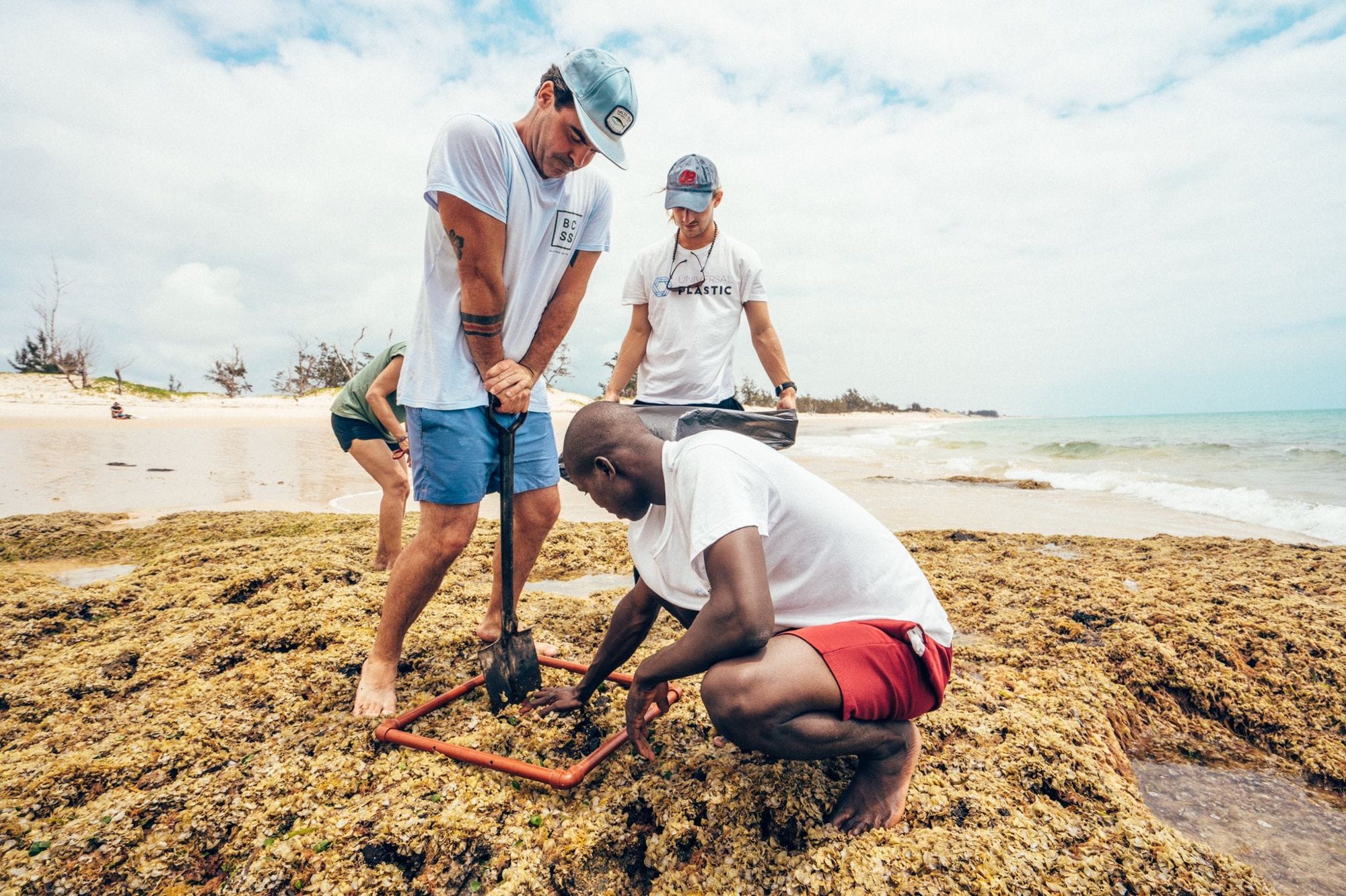
Figure 3. Quadrat sampling on a coastal substrate, Benguerra Island.
From 22 million measurements to knowledge
The observatory’s records cover ocean conditions (temperature, oxygen, pH), weather and currents, biodiversity, underwater acoustics and marine plastics monitoring, including size and polymer class. Each series offers a different perspective; the value appears when they are connected over time.
This is the same logic we set out in Beyond the kilos and in We use data to regenerate oceans: the quantity collected or measured is a starting point, and knowledge comes from comparing, contextualising and reusing the evidence.

Figure 4. From separate observations to ocean knowledge: connecting data series over time. Universal Plastic infographic based on Lebrato et al. (2026).

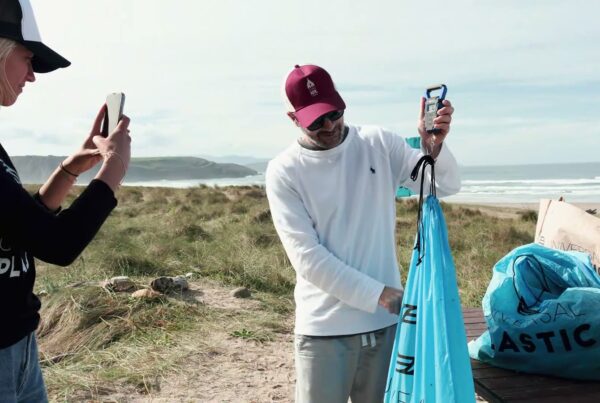
Figure 5. Sorting of recovered marine debris during plastics monitoring.
Open, traceable and reusable data
For evidence to be useful, it takes clear methods, traceable data and ways of sharing it that make it easy to discover and reuse. The article and its companion study on architecture and data (Frontiers in Marine Science, 2026) describe quality controls, metadata structure, repositories with DOI identifiers and access routes in line with the FAIR principles (findable, accessible, interoperable and reusable data). The datasets are available in the observatory’s public database and through repositories with DOI links.
It is the same principle behind our data space (what is a data space?) and our connection to ODIS (what is ODIS and why does it matter?): data gain value when other people can find them, compare them and use them again. The authors also point to their usefulness for the measurement, reporting and verification (MRV) of environmental outcomes and for blue-economy instruments.
Universal Plastic’s contribution
Álvaro Bravo is listed as a co-author of the study, affiliated with Universal Plastic. The article credits his contribution as conceptualisation, data curation, funding acquisition, methodology, project administration, resources, software, and review and editing of the manuscript.
For Universal Plastic, taking part in this collaboration is an opportunity to contribute experience and to learn alongside scientific teams and local communities, building on our work in citizen science and marine data infrastructure. The study reflects the joint work of many people and organisations: its results belong to the observatory and to all its collaborators, and should not be read as data or results of Universal Plastic’s own.

Figure 6. BCSS and Universal Plastic team on Benguerra Island.
From observation to intelligence for decisions
For Universal Plastic, the experience of scientific collaboration in Bazaruto is part of the knowledge base that inspires Blue Resilience OS, our maritime operational intelligence platform. The direction is to connect observations from different sources with their environmental and territorial context and with science-based models and algorithms: moving from observing to assessing risk and exposure, identifying priorities, guiding action and tracking its results.
This approach can help, for example, to prioritise coastal areas for monitoring or intervention, and to assess the exposure of ecosystems, infrastructure and blue economy activities to different pressures. It can also provide traceable evidence to design and track blue finance initiatives: from setting priorities to monitoring indicators and results.
The Benguerra community and collaborative science
Collaboration also depends on the people who know and care for the territory. The article includes the Benguerra Island Community as a collective author, in recognition of their local knowledge, their support for field operations and their foundational role in the vision and practice of the observatory.
Universal Plastic’s participation in this work reflects our commitment to connected, collaborative ocean science. We thank BCSS, Kisawa Sanctuary, the Benguerra Island Community and all the people and organisations that make the observatory possible.
How to cite and references
Article citation: Lebrato, M., et al. (2026). Africa’s first permanent Ocean Observatory: powering science, defending nature, and shaping policy for ocean governance and the blue economy. Frontiers in Marine Science, 13, 1821923. doi:10.3389/fmars.2026.1821923.
- Lebrato et al. (2026), full article in Frontiers in Marine Science.
- Companion study: “Africa’s first long-term ocean observatory in the Bazaruto Archipelago for multi-ecosystem and biodiversity data”.
- BCSS Ocean Observatory: public database.
- Bazaruto Center for Scientific Studies (BCSS) and Kisawa Sanctuary.
From observation to decision
Discover how we connect observations, data standards and analytical tools in Blue Resilience.