
Impact isn’t measured in kilos alone: the data behind a plastic collection
Universal Plastic · 2026
A clean-up action with ISASTUR shows how data lets us go beyond the amount of waste removed, generating useful information to understand plastic pollution.
What is a plastic collection really worth?
When we talk about waste clean-ups, the result we usually highlight first is the number of kilos removed. It’s an easy figure to understand and communicate, but it doesn’t tell the whole story.
Two clean-ups can remove the same amount of plastic and still provide very different information about the environment where they took place.
What types of waste turn up? Where do they concentrate? What can we learn from their presence? How can we use that information to guide future action?
At Universal Plastic, we work to answer these questions, turning clean-up actions into structured, verifiable data.
Removing plastic matters. Understanding what that plastic tells us is what lets us go further.

A clean-up with ISASTUR that generates more than just waste removed


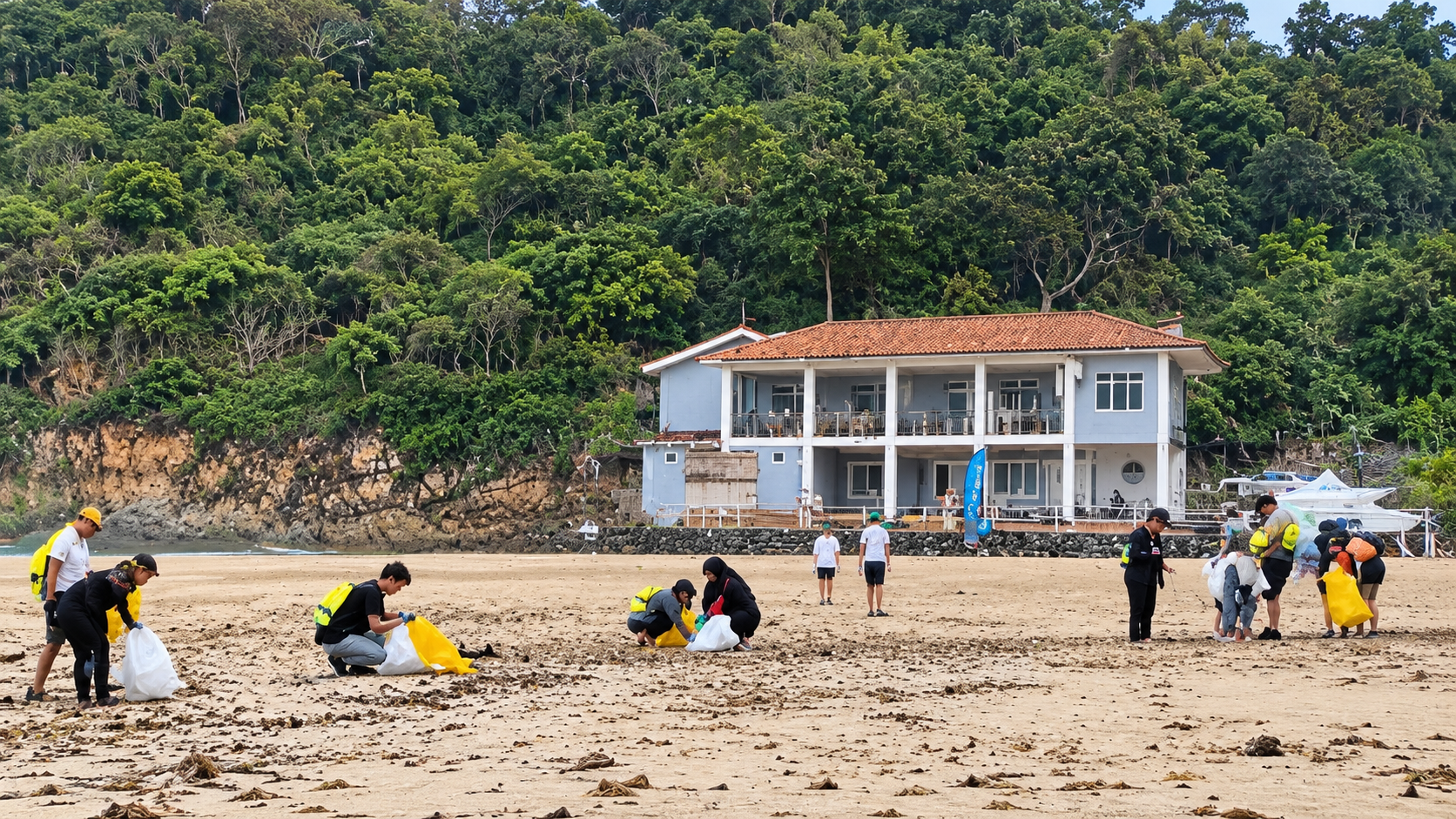
Recently, we joined the ISASTUR team for a day of marine plastic waste monitoring in which on-the-ground action became a digital record of the results.
Beyond removing waste, this activity made it possible to feed the collection’s information into Universal Plastic’s data space, where every record helps document the presence of plastic pollution.
The amount collected is one indicator, but it’s also important to know the location, the characteristics of the waste and the evidence associated with the activity.
For example, this clean-up turned up old pellets. Recording their presence is valuable information: besides documenting which types of waste appear, it helps us understand how long they persist in the environment. As a reference point, in December 2023 the ship Toconao lost a container of pellets off the coast of Portugal that later washed up on beaches in Galicia; Galician authorities reported the collection of 2.3 tonnes by 15 January 2024 [1]. We are not claiming that the pellets found in this clean-up came from that spill: the Galician case simply illustrates why identifying, recording and contextualising this kind of finding can provide valuable information.

The CSAV Toconao, which in December 2023 lost the container of pellets off the coast of Portugal that later reached beaches in Galicia. Source: La Razón (Spanish).
This approach means a one-off action doesn’t end when the day is over. The information stays on record and can become part of a wider body of environmental knowledge.
From kilos to data: a different way to measure impact
The weight of the waste removed lets us quantify part of the result. However, to better understand plastic pollution we need additional information.
Recording the types of materials found, their location and the conditions of each clean-up helps build a fuller picture of how waste is present across a given area.
When these records accumulate and are analysed together, they can help identify patterns, compare results and guide new interventions.
That’s why, at Universal Plastic, we use technology to turn clean-ups into traceable digital evidence.
Through our app, we record information from each action and use artificial intelligence to help identify waste. These records can become ONDAs (Ocean Notarized Digital Assets), verifiable digital assets that bring traceability to the information generated.
The goal isn’t just to prove that a clean-up took place, but to make sure the data it generates keeps adding value long after it ends.

When local action contributes to global knowledge

Plastic pollution isn’t evenly distributed. Its presence varies between locations and is shaped by many environmental and human factors.
That’s why it matters that data generated in different places can be connected, compared and shared.
Universal Plastic is part of ODIS (Ocean Data and Information System), an initiative coordinated by UNESCO’s Intergovernmental Oceanographic Commission (UNESCO-IOC), which facilitates the exchange of ocean data.
This connection gives clean-up data international visibility and helps build a shared knowledge base on plastic pollution.
In this way, local actions like the one carried out with ISASTUR can become part of a wider information system — one where collaboration between businesses, citizens and the scientific community is essential.
Measuring better to make better decisions
The clean-up carried out with ISASTUR represents one way of understanding corporate involvement in protecting the environment: combining direct action with the generation of environmental information.
The value of these initiatives doesn’t lie only in their immediate outcome. It’s also in their ability to generate evidence that helps us better understand the problem, improve future action and communicate results transparently.
At Universal Plastic, we believe that building greater ocean resilience requires exactly that: connecting on-the-ground action with information that can be used to make decisions.
Impact isn’t measured in kilos alone. It’s also built from the data that helps us understand where to act, how to improve, and what results we’re actually achieving.

Why do we need to measure impact beyond the weight of plastic?
Discover how we’re working to build a fuller picture of the impact of plastic pollution on biodiversity, ecosystems and the blue economy.