
Álvaro Bravo on TPA: “There is no data that tells us what the consequences are of having our seas and oceans polluted”
Universal Plastic · 2026
The CEO of Universal Plastic explains on TPA Noticias how the company tackles marine plastic pollution, why data management changes the conversation with companies and administrations, and what role Asturias plays in all of this.
Álvaro Bravo, CEO of Universal Plastic, appeared on the TPA Noticias interview to talk about innovation and the blue economy. The conversation opens with the recognition the company has just received in Brussels as Europe’s Best Blue Economy Startup, and moves on to what really matters: what the company does and, above all, how it does it.

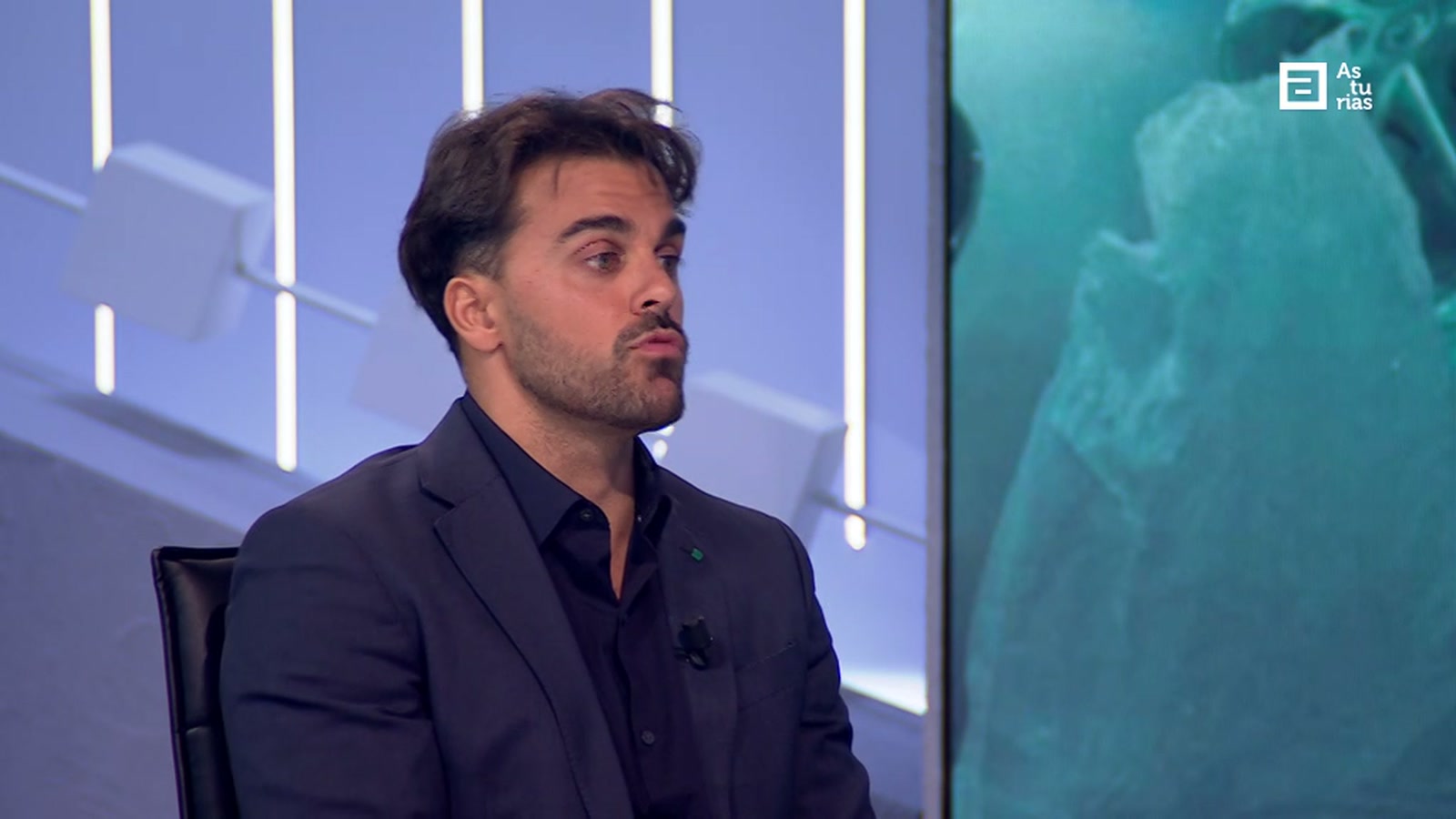
Álvaro Bravo and the TPA Noticias presenter during the interview.
“Boosting the productivity of the seas”
Asked what Universal Plastic is, Álvaro describes it as a science and technology company that seeks to “boost the productivity of the seas and build ocean resilience” through digital solutions to monitor and mitigate marine plastic pollution.
In the interview he explains that the solution rests on three pillars, because the problem is too big for just one: involving civil society, companies and governments.
The citizen science app: clean up and report
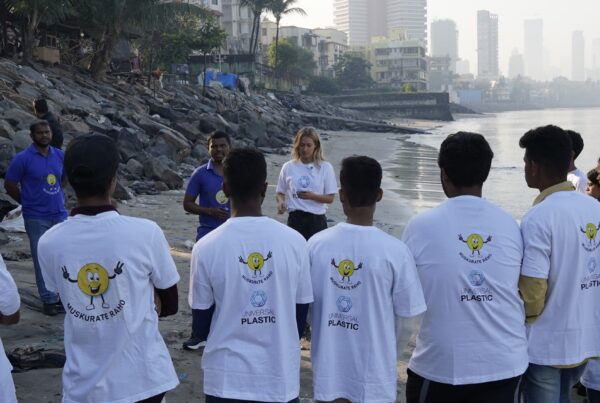
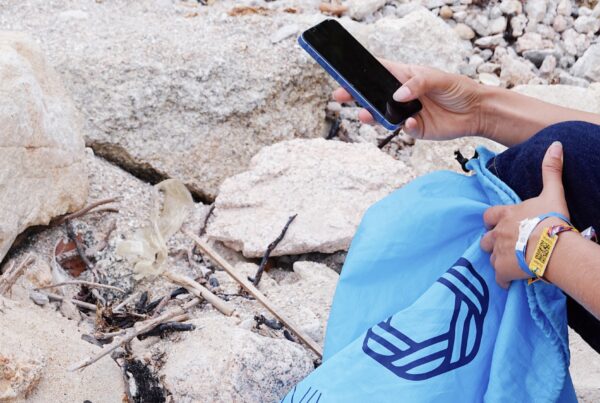
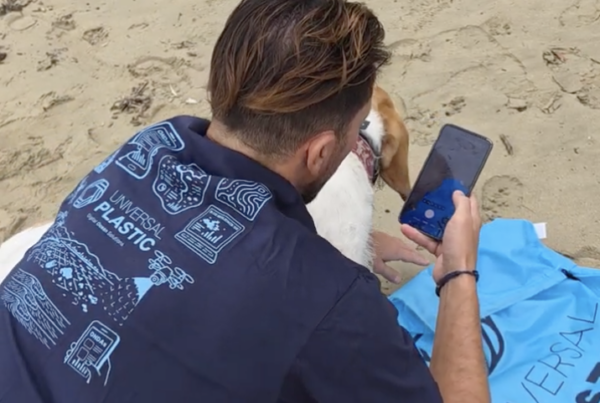
The first pillar is the citizen science app the company was born with. Anyone can download it, go to the beach and report: not only removing plastic, but also taking photos that are later turned into data.
“The act is great, but it is much more important to contribute data to understand it, to be able to put those numbers on the table, than the act of collecting it.”
The underlying problem: there is no data
That, according to Álvaro, is the heart of the matter:
“The main problem we face in solving this is that there is no data that tells us what the consequences are of having our seas and oceans polluted.”
Without those numbers, he adds, the economic cost and the cost in health and well-being are also unknown. And without them the public conversation is stuck in a story that no longer moves anyone: whales, dolphins, turtles. “That narrative […] is not having an impact,” he says. The alternative he proposes is to put empirical numbers on the table so that decisions can be more pragmatic.
From corporate social responsibility to public budgets
The second pillar is companies. Universal Plastic invites them to create corporate social responsibility campaigns and build the blue economy into their strategy. The money from those campaigns funds beach cleanup organisations around the world that, besides removing plastic, capture data.
With that volume of information, the company develops software capable of estimating the impact on biodiversity, tourism and the economy. And with those figures it goes to governments:
“Do you know you should implement an ocean resilience strategy against plastic? Because otherwise, in the next ten years you will lose productivity in biodiversity […], tourism […], socioeconomic development […], social well-being.”
The aim, he says, is for the debate to stop being only environmental and become pragmatic too.
Pellets and tides: five days out of thirty
Technology, he insists, helps us know when plastic arrives, where it is and where it is best to prioritise collection. The example he gives is a budget of 30 million euros to clean Spain’s coasts: the point is not “throw it over there and let it roll”, but how to maximise it.
The case of the pellets in Asturias illustrates it well. Of the 30 days in a month, there were five when the weather conditions gave you everything; that is where collection resources should have been concentrated, instead of spreading them over a whole month. That knowledge, he says, is what allows “better performance of the cleanup process” and what can save money for the administration, both in cleanup and in the loss of productivity that is avoided.
Álvaro Bravo explains on TPA Noticias why tides matter in pellet cleanup.
Artificial intelligence: our own models
Álvaro Bravo explains how Universal Plastic uses artificial intelligence.
AI is behind a good part of that work. Universal Plastic starts from well-known tools, the “famous ChatGPT” and its API, and builds its own algorithms on top of them: extraction of data on plastic objects, behaviour of collectors, detection and cleaning of satellite images, and estimation of plastic concentrations.
“It is a key tool. […] It allows us to move at a huge pace that we could not reach without it.”
UNESCO, citizens and the barrier of a nascent market
On the interest of administrations, Álvaro is honest: there is interest, but the market is so new that it still has to be explained. “We have to keep preaching, we have to keep evangelising,” he says. Among the organisations that have approached the company he mentions UNESCO, with which Universal Plastic collaborates to be the global data space for monitoring marine plastic in the oceans.
He also acknowledges that citizens are more engaged than the public side, and that it is the public side that is needed to guide and convey the message.
Innovating from Asturias
The conversation ends on the home territory. For Álvaro, technology is key to the region’s future alongside tourism, and technology companies have a lot to say in Asturias’ future employment:
“The Asturias of the future has to be this one, the one of innovation, or not be at all.”
Innovating here has pros and cons. Among the cons: less access to capital, events and human capital, and an ecosystem that is harder to get moving. “You’re very much on the periphery.” Among the pros: it is comfortable to live in, things get done quickly and easily, there is a good entrepreneurial ecosystem, good connections to Madrid, Barcelona, London, Amsterdam or Helsinki, and support programmes for the region.
On Naval Azul Gijón, he values that a city that looks out to sea and has “enormous potential” in the blue economy has a hub, a node and special conditions for this kind of activity.

Álvaro Bravo during the TPA Noticias interview.
Now: the data space
The project they are working on is a data space approved by Spain’s Ministry for Digital Transformation. Within it, the space dedicated to marine plastic pollution and its transfer to the food chain, with monitoring of plastic and of the food safety of fishery products. “Very well, moving forward, with a lot of companies already involved,” he sums up.
Watch the full interview
Discover Universal Plastic and see how we connect action on the ground with data to better understand plastic pollution.