Pellets and microplastics in Galicia: citizen science at Morriña Festival
Universal Plastic · 2026
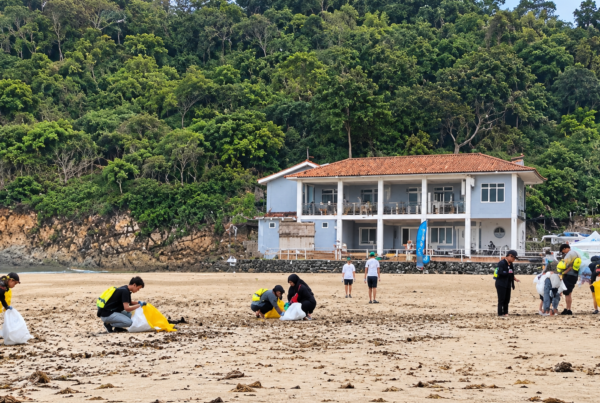
Plastic pellets keep turning up on Galician beaches long after they have disappeared from the headlines. During the citizen science days held at Morriña Festival, participants found pellet and microplastic waste on the beaches of A Coruña.
These tiny granules, used as raw material to manufacture plastic products, reached the Galician coast in huge numbers after the Toconao spill in 2023. Their small size helps them stay in the environment and go unnoticed. In addition, various studies indicate that they may contain chemical additives, accumulate pollutants and be ingested by marine fauna, with possible negative effects on ecosystems.
This finding is also a reminder that the pellets visible on beaches are only one part of a much broader problem. Microplastic pollution remains one of science’s main uncertainties because of the limited information available on its distribution, behaviour and impact on marine ecosystems.
For this reason, recording every finding makes it possible to identify where these materials are still present, how they evolve over time and where ocean regeneration strategies need to be strengthened.
Music brings people together. Citizen science multiplies their impact
With the aim of generating knowledge about marine plastic pollution, Universal Plastic launched —during the festival in A Coruña and together with Morriña Festival and Bring The Noise— a citizen science campaign that harnessed the festival’s ability to draw crowds to turn public participation into useful environmental information.
During the activity, participants walked 7 beaches in A Coruña and recorded observations of pellets, microplastics and other waste using the Universal Plastic app.

Finding this waste years after the spill reinforces the need for tools that can detect patterns that would hardly be identified through one-off sampling campaigns.

From an individual observation to data that is useful for science
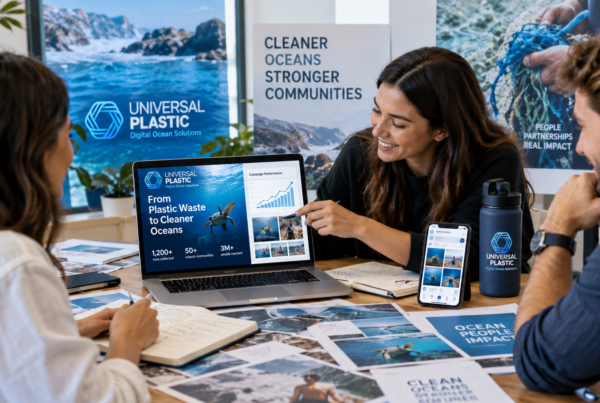
Universal Plastic’s app guides each participant through a simple, standardised protocol to document the waste they find. Thanks to automatic geolocation and photographic records, each observation becomes structured data that can be added to the monitoring of marine plastic pollution.

Recording a pellet is not just about documenting a piece of waste. Each observation helps identify on which beaches these materials keep appearing, how they are redistributed after weather events, which areas concentrate the greatest accumulation and how this pollution evolves over time.
This effort complements the work of researchers and administrations. By multiplying the number of observations made in the field, it makes it possible to expand a knowledge base towards the ONDAs data space in order to better understand a complex environmental problem.
This model also shows how festivals, public administrations, organisations and citizens can collaborate to produce scientific knowledge that is useful far beyond the event itself.
A legacy driven by a community that creates good ONDA
One of the most valuable lessons of the experience came at the end of the days. The most repeated comment at the end of the activity was that the app could be used any day of the year. Many attendees explained that they would keep recording waste on their usual walks along the beach, turning a one-off experience into a new way of taking part in protecting the coast.
That change of perspective is one of the initiative’s main legacies. The campaign does not end when the festival does; it continues every time a person goes back to the beach and decides to record a new finding.
Festivals last a few days. Pellet and microplastic pollution can remain for years. As long as this waste is still present on our coasts, knowing where it appears, how it changes over time and what patterns it follows will be essential to protect marine ecosystems.
Citizen science shows that anyone can help us better understand the state of our coasts.