
The plastic found in the Balearic Islands
Universal Plastic · 2026
Images of beaches covered in waste often come from distant places. Remote islands, Asian coastlines or massive accumulations in the middle of the ocean. That visual distance creates a misleading impression. It makes plastic pollution seem like something that belongs to other territories and other realities.
However, looking closely at Spanish coastlines is enough to understand something different.
Plastic pollution is also part of the Mediterranean
In the Balearic Islands, a campaign promoted together with 0Plastic and registered through Universal Plastic shows that plastic also accumulates in places of high environmental and touristic value. shows that plastic also accumulates in areas of high environmental and touristic value. Beaches, coves and coastal areas that form part of the Mediterranean imaginary hide a constant pressure of waste that often goes unnoticed until someone decides to measure it.
In the Balearic Islands, a campaign organized by 0 Plastic, promoted by Menorca Preservation, Mallorca Preservation and IbizaPreservation, with the collaboration of Grupo Herbusa in the Pityusic Islands, and registered through Universal Plastic, shows that plastic also accumulates in areas of high environmental and touristic value. Beaches, coves and coastal areas that form part of the Mediterranean imaginary hide a constant pressure of waste that often goes unnoticed until someone decides to measure it.
That is precisely the objective of “Km de plástico por Iris”.
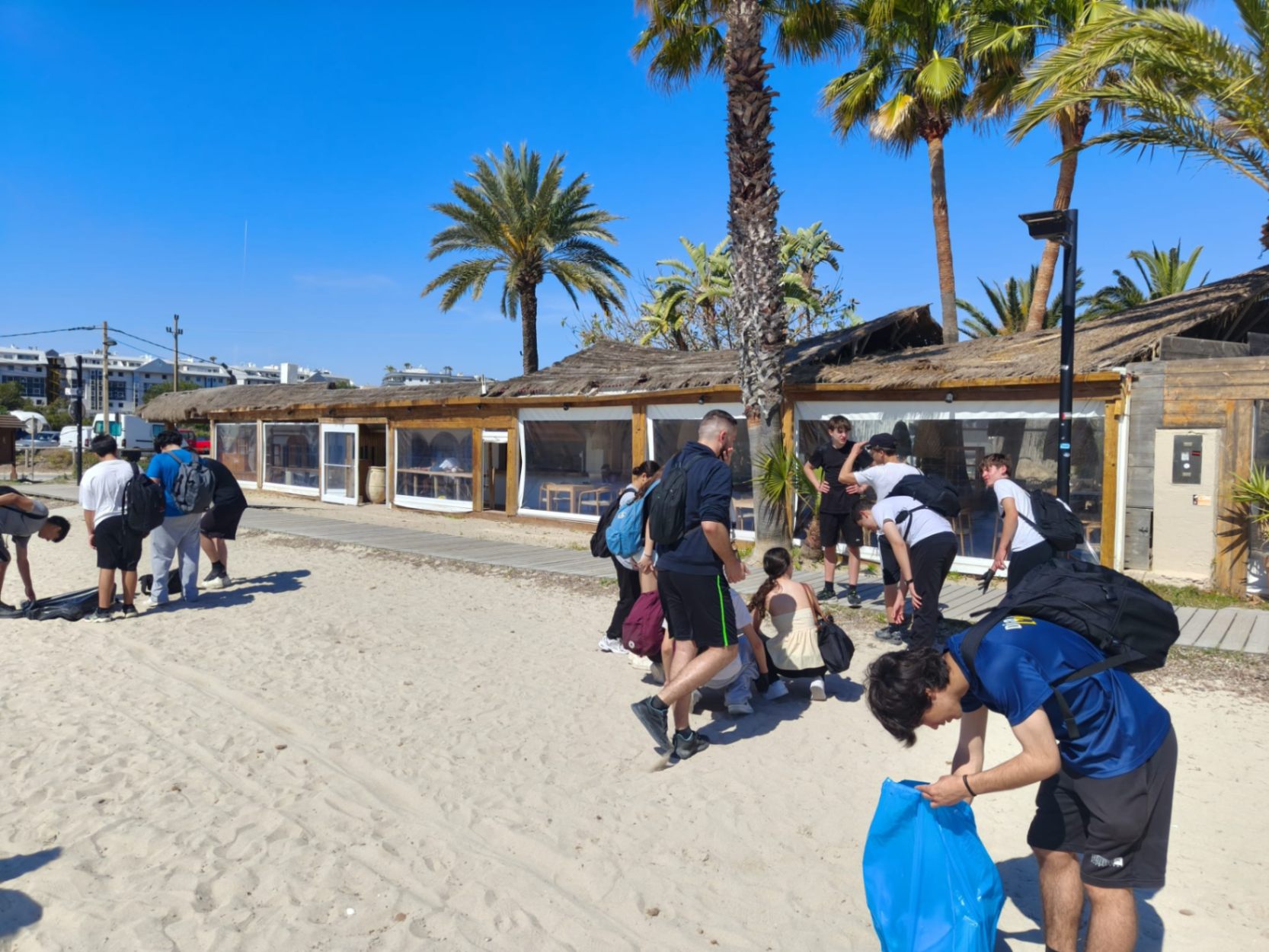
The campaign brings together secondary school students from different educational centres across the Balearic Islands in waste collection days, where each class participates as part of a collective competition. The competitive element activates participation, but the real value appears when students directly observe the amount of plastic they find in spaces they know and regularly visit.

More than 100 kilos of plastic collected in a single day<br/><br/>
The data registered during the collections reveals a reality that is difficult to ignore.
The campaign has already exceeded 20 collection actions carried out in different areas of the islands. Several of them have surpassed 100 kilograms of waste removed in a single day. One collection reached 118.02 kg of plastic, while another registered 101.5 kg. These figures are documented and accessible through the Universal Plastic platform, where each action generates verifiable and comparable information.
Beyond the volume collected, the project reveals something important about environmental education. Engagement increases when students take part in real actions, observe concrete results and understand that data helps explain what is happening in their own environment.

View the full record of this collection in Menorca: 101.5 kg of waste removed as part of the “Km de plástico por Iris” campaign.
When data turns a collection into useful information
Collecting waste has an immediate impact. Measuring it changes the conversation.
When a campaign registers how much plastic appears, where it is found and what volume is removed, the information stops being anecdotal. It becomes useful evidence to understand patterns, identify accumulation areas and build a clearer view of the state of the coastline.
This approach also helps challenge another common idea. The plastic problem is not limited to large visible dumps or extreme scenarios. It often appears fragmented, dispersed and normalised within everyday landscapes. That is precisely why generating local data over time is so important.
The collaboration between 0Plastic and Universal Plastic adds a particularly valuable dimension to the project. The campaign combines citizen participation, education and structured recording of environmental information. Each collection adds direct action in the territory while, at the same time, building a database that helps better understand the scale of the problem.
Environmental education based on real action<br/>
Students play a central role in this dynamic.
The classes are not participating only as environmental volunteers. They are also part of a process that connects observation, analysis and collective awareness. Plastic stops being an abstract idea and becomes something visible, measurable and close.
In a context where many environmental conversations are still perceived as distant or overly technical, initiatives such as “Km de plástico por Iris” bring the problem to a human and tangible scale. They do so through evidence, local action and a generation that already understands that protecting the sea also means measuring what is happening in it.
Because the plastic found in the Balearic Islands does not belong somewhere else. It is here. And the data shows it clearly.